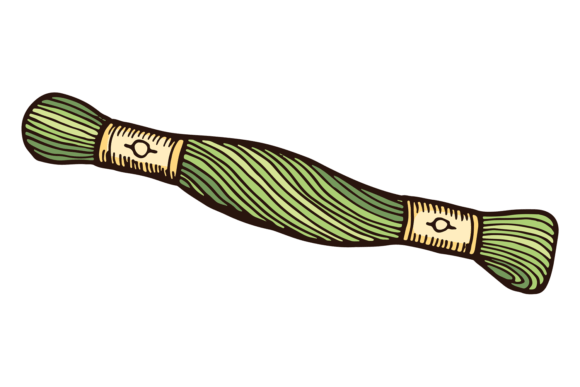
Reviewing the Embroidery Thread Skein Color Sketch
As a designer who spends half my life digitizing patterns and the other half staring at tangled bobbins, I have learned that not every graphic translates well to thread. We often get swept up in the aesthetics of a digital file, forgetting that embroidery is a tactile, three-dimensional medium. When I first pulled up Embroidery Thread Skein Color Sketch. Ne, my initial reaction was one of cautious optimism. It is listed under Illustrations and Graphics, which tells me it is likely a vector or high-resolution raster asset rather than a pre-digitized stitch file. This distinction is critical for anyone planning to use it in a real-world embroidery project.
The Aesthetic Appeal and First Impressions
The visual personality of this sketch is clean, minimalist, and instantly recognizable. The isolated needlework symbol on a white background suggests a focus on clarity. For those of us creating brand assets or printable mockup materials, this simplicity is a gift. It does not fight for attention; instead, it serves as a quiet nod to the craft itself. The mood it creates is professional yet approachable, making it an excellent candidate for boutique branding or small shop product labels.
However, because this is a Graphics asset provided in EPS, JPG, SVG, and transparent PNG formats, we must discuss the translation from screen to fabric. The lines in the sketch appear smooth and continuous. In digital design, this is perfect. In embroidery, continuous lines require careful planning. If you intend to turn this illustration into a machine embroidery design, you cannot simply import the SVG and hit "go." You must consider how those elegant curves will behave when punched with thousands of tiny holes.
Real-World Application: The Custom Tote Bag Scenario
Let’s walk through a practical scenario. Imagine you are preparing a run of custom canvas tote bags for a local craft fair. You want a subtle, sophisticated logo that signals "handmade quality" without screaming for attention. You choose Embroidery Thread Skein Color Sketch. Ne as the central motif. Because the design is isolated and likely features distinct shapes, it works beautifully on the textured surface of heavy cotton canvas.
In this context, the sketch acts as a badge of authenticity. When stitched out, perhaps using a simple running stitch for the outline and a light fill stitch for any shaded areas, it elevates the perceived value of the bag. Customers do not just see a bag; they see a curated item. The clarity of the original illustration ensures that even from a distance, the iconography is legible. This is crucial for Etsy sellers and craft business owners who rely on instant visual communication in their product photography.
Considerations for Apparel and Soft Goods
Moving beyond tote bags, let’s consider custom apparel. If you are applying this design to a sweatshirt or a baby onesie, the fabric texture changes everything. A fleece sweatshirt has a plush pile that can swallow fine details. If the Embroidery Thread Skein Color Sketch. Ne has very thin lines in its original graphic form, you may need to thicken them during the digitizing process. Otherwise, the stitches might sink into the fabric, losing the crispness that makes the illustration appealing.
For baby embroidery, softness is paramount. You would likely avoid dense satin stitch borders around this sketch, opting instead for lighter coverage to keep the garment comfortable against sensitive skin. The transparent PNG format mentioned in the product description is particularly useful here. It allows you to place the sketch over photos of various fabric colors to test contrast before you even thread your machine. This step saves time and reduces waste, a key concern for any small shop product line.
Technical Challenges and Fabric Compatibility
While the aesthetic is strong, we must address where this design requires caution. Embroidery is unforgiving of poor preparation. If you are working with stretchy fabrics like jersey knits for t-shirts, the stability of the design becomes a concern. The sketch’s linear elements could distort if the fabric stretches during wear. Using a cut-away stabilizer is non-negotiable in these cases to maintain the integrity of the shape.
Furthermore, consider the hoop size. If you are attempting to place this on a curved surface, such as a cap or a structured hat, the layout must be adjusted. Flat illustrations do not always wrap well around convex surfaces. You might need to break the design into smaller sections or adjust the angle to ensure it looks correct from the front view. For embroidered patch creation, however, this sketch is ideal. Patches are typically stitched on stable backing before being applied, allowing for higher stitch density and finer detail without the risk of fabric puckering.
Dark fabrics present another hurdle. If the original sketch relies on subtle color variations, these will be lost on black or navy material. You must verify that the thread colors you select provide sufficient contrast. Sometimes, simplifying the design to a single-color outline works better for dark garments, turning the illustration into a striking silhouette rather than a detailed drawing.
Enhancing Brand Value and Customer Trust
Why does the choice of graphic matter so much? Because consistency builds trust. When a customer sees a coherent visual language across your finished product, your packaging, and your online store, they perceive professionalism. Embroidery Thread Skein Color Sketch. Ne fits seamlessly into a narrative of traditional craft meets modern design. It signals that you respect the tools of the trade.
For commercial embroidery projects, such as corporate gifts or uniform branding, this type of iconography is safe yet distinctive. It avoids trendy elements that might date quickly, ensuring that your design assets remain relevant for years. Whether used for holiday embroidery gifts or year-round merchandise, the timeless nature of the thread skein motif resonates with a broad audience.
Practical Designer Notes for Implementation
Before you commit to production, follow these steps to ensure success:
- Test on scrap fabric: Always stitch a sample on the exact material you plan to use. Check for puckering or thread breaks.
- Verify file usage rights: Since this is sold as an illustration/graphic, confirm whether the license allows for commercial use in physical goods or if it is for digital mockups only. Do not assume it includes the right to resell the digital file itself.
- Digitize with care: If converting the SVG to an embroidery file, pay attention to corner nodes. Sharp corners in graphics often need to be rounded slightly in stitching to prevent thread bunching.
- Check contrast: Use the transparent PNG to overlay the design on different background colors. Ensure it remains visible and impactful.
- Consider scale: What looks good on a screen might be too small to stitch cleanly. Ensure the minimum element size meets your machine’s capabilities.
In conclusion, Embroidery Thread Skein Color Sketch. Ne is a versatile asset for the modern maker. It bridges the gap between digital design and tactile craft. By understanding its limitations and leveraging its strengths, you can create products that are not only visually appealing but also technically sound. Whether you are an experienced apparel decorator or a hobbyist looking to elevate your personalized gift offerings, this sketch offers a solid foundation for creative exploration. Just remember: the magic lies not just in the image, but in how you translate it into thread.